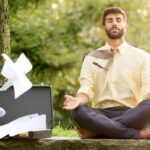



Stress is a constant companion for many people these days. Between deadline pressure, sensory overload and constant availability, there is hardly any room to breathe. But it is precisely this space that is essential for your health. Because stress isn't just unpleasant - it can make you ill. In this article, we show you 7 effective stress reduction exercises that you can easily integrate into your everyday life. You don't need a lot of time or previous experience. Just the desire to get closer to yourself again.
Before we get started, it is important to take a brief look at the physiology. Stress is a physical Reaction: The sympathetic nervous system is activated, cortisol is released, pulse and blood pressure rise. This is helpful in the short term. However, chronic stress throws your nervous system out of balance.
Typical consequences:
That's why it's important to regularly press the "reset button". And this is exactly where targeted stress reduction exercises come into play.
These exercises are scientifically based, can be implemented immediately and help you to calm your nervous system. Try out what works for you.
Breathing is the most direct access to your nervous system. With the 4-7-8 technique, you can reduce your tension in minutes:
This is how it works:
Repeat this 4 to 8 times. Particularly suitable before falling asleep or in stressful situations.
You can also find more breathing exercises in our article Find inner peace.
This Jacobson method allows you to release tension in a targeted manner:
Instructions:
For example, start with your hands and work your way down to your feet. PMR is also recommended by health insurance companies for stress reduction (Source: DAK).
Movement and mindfulness can be perfectly combined. Ideal for anyone who has difficulty sitting.
How it works's:
Just 10 minutes is enough to re-center yourself.

Emotional Freedom Technique (EFT) combines acupressure with affirmations. It can release emotional unblock and reduce inner tension.
Example:
Repeat the sequence several times. Studies show positive effects on stress and anxiety (APA study).
This Technology brings brings you back to the here and now within minutes - particularly helpful in cases of overthinking or panic.
Ask yourself one after the other:
One of the best exercises to stop sensory overload.
Writing down thoughts creates distance. Especially helpful:
Journaling relieves stress and creates mental clarity.
You can also find more on this topic in the article relieve stress.
Body language influences your psyche. The "power pose" strengthens Self-confidence and reduces stress hormones.
That's how's:
Works particularly well before challenging conversations.
In the video, Greator Life Coach trainer Christina Hommelsheim gives you 5 tips to combat stress.

If you have the Feeling that everything is too much for you, then our free burnout test just the thing for you.
👉 Start your free burnout test now
In just a few minutes, you will receive an initial assessment of your mental stress and valuable tips on how to counteract it.
Walter Hommelsheim, Coach & Trainer at Greator life coach
Reducing stress is not rocket science. A few minutes a day is often enough to calm your nervous system. The important thing is not perfection, but regularity.
Start with an exercise that is easy for you. Perhaps it's a breathing technique, writing or a mindful walk. Your nervous system will thank you.