


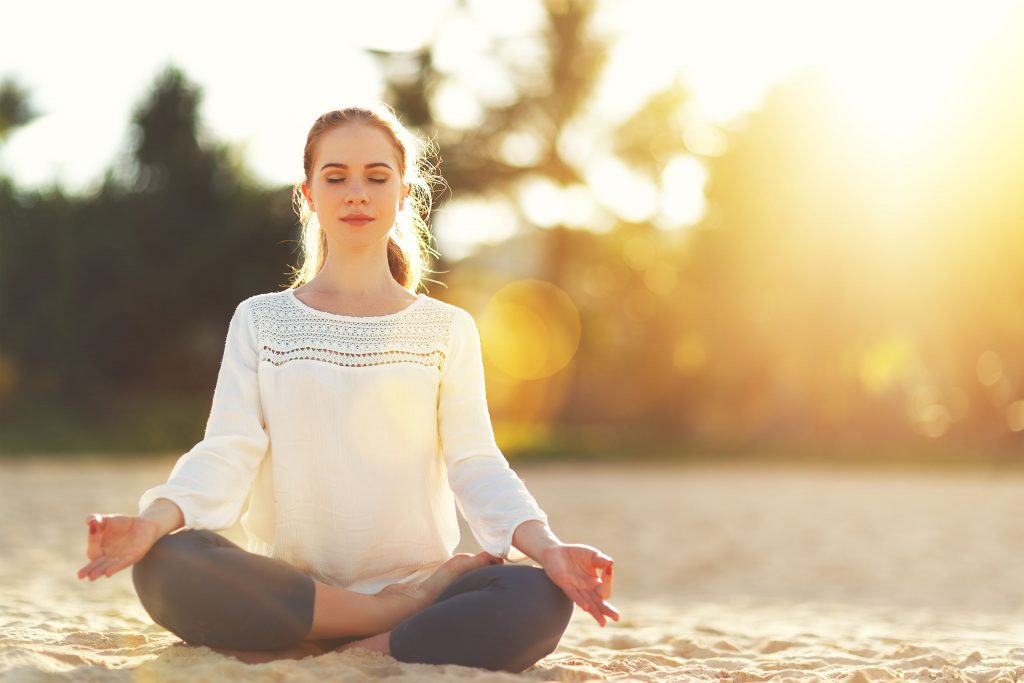
For beginners, meditation means consciously directing one's attention to a focal point—such as the breath, a mantra, or one's own movements—in order to slow down the flow of thoughts and find inner peace.
You've tried it several times already. You downloaded an app, sat there for three minutes, thought about your to-do list, and then put your phone away again. The feeling afterward: I'm just not the type for this.
The problem wasn't you. The problem was the expectation.
Meditation for beginners almost always fails because of a single misunderstanding: that meditating means emptying your mind. That’s not true. Meditation isn’t a state you reach. It’s a skill you practice. And like any skill, it starts with simply beginning—even if it seems clumsy at first.
This article shows you how to do it.
Meditation refers to a mental practice in which attention is deliberately focused on a point of reference in order to slow the flow of thoughts, bring the body and mind into harmony, and promote inner clarity.
That sounds technical. What it means in everyday life: You give your mind something to focus on instead of leaving it to its own devices. This single point of focus—whether it’s your breath, a Mantra or a guiding voice—that is the tool. Everything else follows from that.
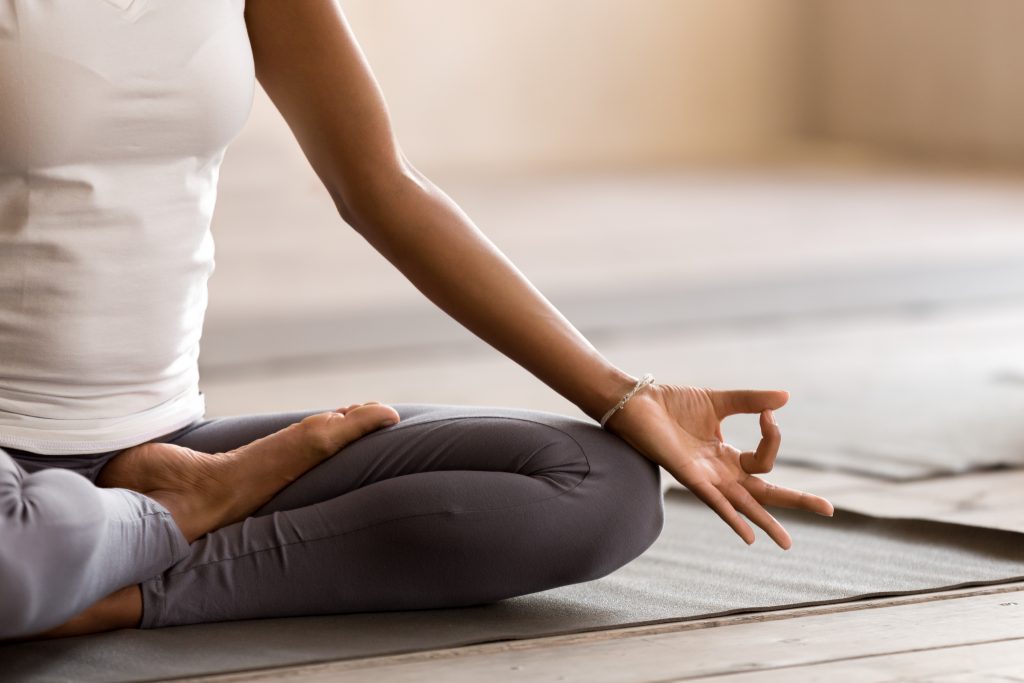
Not every form of meditation is right for everyone. Here is an overview of the most important techniques, especially for beginners:
| Method | What It's All About | For whom |
|---|---|---|
| Breathing meditation | Focus on Natural Breathing | All beginners, suitable for use anywhere |
| Guided Meditation | A voice guides you step by step | When your mind has a lot on it |
| Mantra Meditation | Repetition of a phrase or sound | When It's Hard to Stay Focused |
| Walking meditation | Mindful Attention While Walking | For people who can't sit still |
| Transcendental Meditation | Silent Sitting with a Personal Mantra | For a deeper practice after getting started |
| Body Scan | Conscious awareness of individual body parts | During physical exertion and stress |
For true beginners, it's best to start with breath meditation or guided meditation. Both can be done without any prior knowledge and work right away.
Meditation is not just a wellness trend. Its effects are measurable.
A long-term study by Massachusetts General Hospital at Harvard Medical School (Hölzel et al., 2011) showed that just eight weeks of mindfulness-based meditation leads to measurable changes in the brain’s gray matter in areas associated with memory, self-awareness, and stress regulation.
A study by the University Medical Center Freiburg (2014) shows that regular meditation significantly reduces cortisol levels—that is, the measurable level of stress in the blood.
Eva Kaczor, Greator’s expert in breathwork and body awareness and creator of the PSYCHEDELIC BREATH® method, describes it this way: Breathing is the most direct access we have to the nervous system. Those who learn to breathe consciously also learn to control their own inner experience, rather than being controlled by it.
This principle—conscious engagement rather than a loss of control—is at the heart of every effective meditation and Breathwork Practice.
Learning to meditate doesn't mean sitting in the lotus position for 20 minutes right away. It means getting started. Here are the five most important basics:
Five minutes a day isn't a compromise. It's the start of a habit. A Routine, which you practice every day, has a greater long-term effect than a long evening of meditation once a week.
Thoughts that arise during meditation are not a mistake. They are proof that the brain is working. Returning to the anchor point, again and again, is the actual practice.
Your brain loves context. A specific place, a specific pillow, a specific time all signal to your mind: It's time to meditate. This lowers your mental barrier.
For many people, the most effective time is first thing in the morning, right after waking up, before reaching for their cell phone. The mind isn't yet in reaction mode.
You don't have to sit in the classic lotus position. The important thing is to keep your back straight, whether you're sitting on a chair, a cushion, or the floor. Lying down works too, but it increases the chance that you'll fall asleep.
Comfortable clothing that doesn't restrict your movement makes a noticeable difference.
Guided meditations take care of the hardest part for beginners: knowing what to focus on. A calm voice guides your attention without you having to maintain the structure yourself.
Greator offers a guided meditation for beginners as an audio file. It is especially suitable for the first few weeks:
The biggest source of error is expectation. Anyone who hasn't experienced deep inner stillness after ten meditation sessions gives up. That's the wrong standard.
The right yardstick: Have you become more consistent? Is it easier for you to refocus when your mind wanders? That's progress.
The Thought carousel It keeps changing. You need an anchor that's always there: your breath.
Here's how it works: Take a deep breath through your nose for three seconds. Hold your breath for four seconds. Exhale through your mouth for five seconds. Repeat this three times. After that, just breathe calmly through your nose and observe your breath without changing it.
This exercise works anywhere—during your lunch break, on the train, or before a difficult conversation.
You don't need a Sanskrit mantra. Write down three short sentences describing what you're grateful for or what you want to embody in your life. For example: "I am calm. I am clear. I am enough."
Repeat these sentences in your mind or say them quietly to yourself. This calms the flow of thoughts and at the same time reinforces positive beliefs. The effect is similar to that of autosuggestion; it is well-documented scientifically and can be applied without any religious context.
If you can't sit still, try walking meditation. Choose a route you're familiar with. Focus on the sensation of your feet on the ground, the movement of your legs, and the rhythm of your steps.
When thoughts arise, acknowledge them and return to your awareness of your body. That is the practice.
Beginners should aim to meditate for five to ten minutes every day. Duration is less important than consistency.
There is no minimum amount of time after which meditation "works." Every conscious minute counts. The question isn’t, “How long should I sit?” The question is, “Will I come back tomorrow?”
According to a study by the University of Waterloo (2017), just ten minutes of daily mindfulness meditation is enough to measurably improve concentration and cognitive performance.
Gradually increase the duration once the shorter session has become a regular part of your routine. Five minutes a day for three weeks is better than thirty minutes once and then nothing at all.
It happens to everyone. Even after years of regular practice.
A busy mind during meditation isn't a problem you need to solve. It's a piece of information. Your mind is showing you what's on its mind right now.
The goal is not to stop your thoughts. The goal is to notice when you’re distracted and calmly return to your anchor point. It is precisely this—noticing and returning—that trains your ability to Emotional Control and to find serenity in everyday life.
Every thought you notice and let go of is a repetition. Not a failure.
The guided meditation is especially helpful in moments like these because the voice gently brings your attention back time and again without you having to actively control it.
You're here because something inside you is telling you that things can't go on like this. Too much pressure, too little sleep, too many thoughts that just won't stop.
Meditation is a first step. But sometimes there’s more to stress than just a busy daily routine. Sometimes it’s a sign that things have been building up for a while.
The free burnout test from Greator helps you accurately assess your current stress level and understand what can really help you right now.
→ Take the burnout test for free now
There's no such thing as "wrong." When you sit and try to be mindful, you're meditating. Even if your mind is full. Even if it doesn't feel "special.".
Five minutes is enough. The question isn't whether you have time. The question is whether you're willing to set aside five minutes.
Meditation doesn't change anything during a single session. It brings about change over the course of weeks. The effects aren't felt while you're meditating, but afterward: in reactions that become a little calmer. In moments when, instead of reacting, you pause for a moment.
That happens, especially at first. Sitting instead of lying down helps. If you fall asleep regularly, meditate in the morning instead of in the evening.
Once you've gotten through the first few weeks and realize you want to do more than five minutes of breath meditation, it's time to take the next step.
Learn meditation shows you how to turn an occasional attempt into a genuine practice. How to overcome the obstacles that arise after your first successes. How meditation becomes not just a technique, but an inner attitude.
For even deeper bodywork that uses breathing as a direct path to inner transformation, it’s worth taking a look at Breathwork Techniques and the approach that Eva Kaczor takes in the Psychedelic Breath School has developed.
Meditation for beginners doesn't require silence, an empty mind, or an hour of your time. It requires only one thing: that you get started.
Five minutes, today. One breath at a time.
Over time, you'll learn to, inner peace Don't let it depend on external circumstances. You'll become calmer, not because your life becomes calmer, but because you're learning to approach it differently.
That's not a spiritual promise. It's practice.
Set your timer for five minutes now. Sit down. Exhale. See what happens.