



Do you feel restless inside, even though everything seems "normal" on the outside? Your thoughts are spinning, your body is not at rest and you ask yourself: Why can't I calm down?
In this article you will find out, what inner restlessness is, why it arises, what warning signs it shows - and above all: what you can actively doto get back into balance.
Because those who understand the signal of unrest have the opportunity to use it - instead of letting it define them.
Inner restlessness refers to a state of mental tension and physical restlessness. You often feel "on the go", can hardly find a clear thought and may feel trembling, palpitations or restlessness in your limbs.
In contrast to short-term stress, which has a clear trigger, inner restlessness can occur diffusely - without an obvious tangible cause.
In the long term, this condition can have a major impact on quality of life, relationships and health.
The causes are mostly diverse and often appear overlapping. Here are the central areas:
Conclusion: Inner restlessness is often a Warning signal of your system: Your body and mind tell you: I need balance. If you recognize this signal, you can react earlier.
The signs are manifold - physical, emotional and mental.
If inner restlessness becomes chronic, it can have considerable consequences: reduced performance, conflicts in the private sphere, health risks.
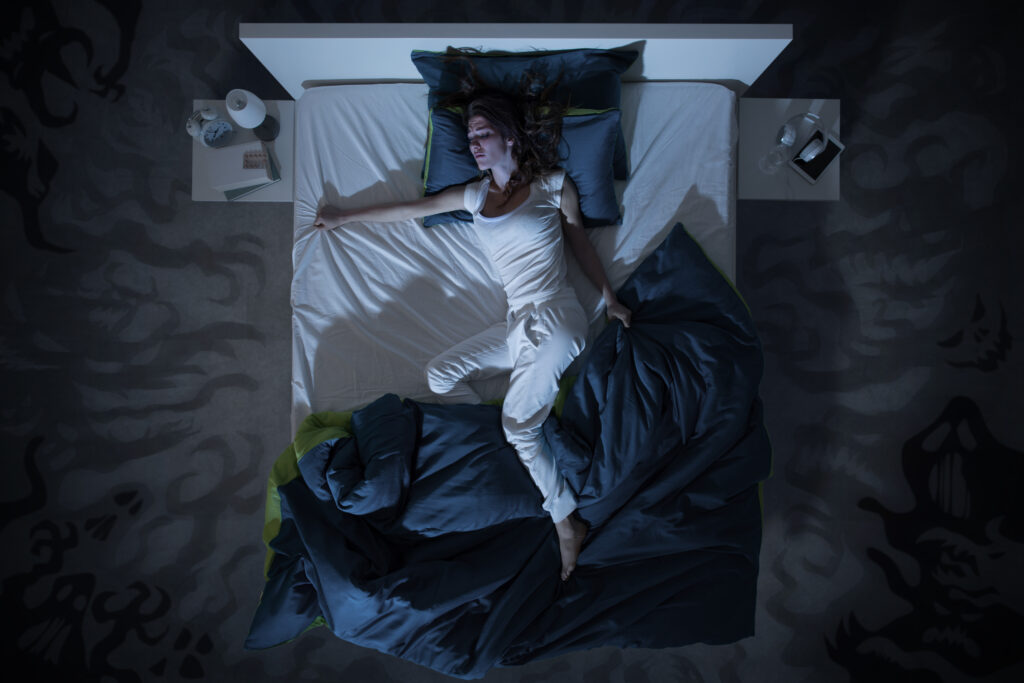
The attempt to simply ignore the inner turmoil or to distract oneself convulsively is rarely crowned with success. It is comparable to the famous thought experiment of the little blue elephant. If you are asked not to think about it, it is guaranteed to appear immediately in your mind's eye. It's the same with inner turmoil: ignorance reinforces the problem.
The goal is to get to the bottom of the causes of your mental tension. This is not so easy with wildly circling thoughts. An effective method to interrupt the carousel of thoughts is the Meditation. In this way, you will be able to take a new perspective and find out the reasons for your inner imbalance.
Whether you have a guided meditation It is up to you to decide whether you prefer to meditate in silence or in a quiet way. The important thing is that you fully engage in meditating. Don't be discouraged if you find your mind still wandering at first. Practice makes perfect, as we all know. It pays to keep at it.
Interesting to know: Hair analyses have shown that meditation can effectively alleviate long-term stress. There is also an exciting study on this topic Study.
Inner restlessness is agonizing. However, you are by no means powerless over this feeling. Besides meditation, there are numerous gentle self-help measures that you can try out:
As already mentioned, meditation is an effective remedy for inner restlessness. Alternatively, this also applies to yoga, mindfulness exercises or the progressive muscle relaxation according to Jacobsen. Many health insurance companies now subsidize such courses.
Physical activity has been shown to help relieve mental tension. This is proven by current studies of the RKI.
While exercising, the body releases happy hormones, which helps you to feel relax. The type of sport you do is of secondary importance. The important thing is that you enjoy the movement and the Sports not feel like an additional mandatory program.
There are numerous medicinal herbs that can provide relief from mental tension. The best known are St. John's wort, lavender and valerian. But also lime blossom and lemon balm show a good effect. You can take the herbs in the form of tea or capsules. It is best to get advice at the pharmacy and follow the dosage recommendations exactly.
Thyme, lavender and rosemary oils have a stress-relieving effect and also promote a restful night's sleep. You can choose to do a back rub or a foot rub. For the former, however, you'll need support at best, such as from your partner. Warm the oil in your hands before you start rubbing it in.
If the body relaxes, the soul also comes to rest. Warm water loosens even stubborn muscle cramps. You can find ready-made bath additives for relaxing baths in almost every drugstore.
Of course, you can also make up your own mixture. Good bath additives against inner restlessness are hay flowers, lemon balm, lavender, valerian and hops.
Coffee and nicotine have a stimulating effect. Anyone who already suffers from restlessness should therefore limit their consumption of these stimulants or, at best, do without them completely. If you don't want to give up your morning coffee, we recommend switching to the decaffeinated variety.
Take time for yourself on a regular basis. Your Needs are important. Therefore, create fixed quiet times that belong only to you. You can use these times for undisturbed meditation, for example. Create a pleasant atmosphere by lighting candles or incense sticks and playing relaxing music.
Homeopathic remedies are becoming increasingly popular in the treatment of inner restlessness. However, before taking them, consult with a Alternative practitioner or pharmacist. The following remedies are particularly effective for restlessness:
If your inner restlessness persists over a longer period of time and massively affects your everyday life, a visit to the doctor is recommended in any case. The same applies if the self-help measures mentioned above do not have any effect.
If the inner restlessness is accompanied by physical symptoms, there could possibly be an organic cause. In this case, you should not postpone a visit to the doctor for too long.
Inner restlessness affects both your performance and your social life. Relationships as well as your physical health. Mental tension massively reduces your attention and ability to concentrate. This can cause you to make mistakes on the job, even when performing routine tasks.
Since inner restlessness makes you irritable, you also get into conflicts with other people more easily. In the worst case, you could face consequences under labor law. Family and friends often withdraw because they feel rejected by you. The resulting loneliness makes your inner restlessness even worse.
But the physical consequences should not be underestimated either. The body can cope well with short-term tension. However, if the regeneration phase does not take place, the autonomic nervous system remains under permanent tension. Permanent stress weakens the immune system and can even increase the risk of heart attack, diabetes and stroke.

Inner restlessness is not an enemy - but a Signpost.
It shows you that something is out of balance.
If you learn to understand them, you can transform them - into clarity, calm and presence.
Take the time to take an honest look. Create space for yourself. And start to consciously shape your balance.
You deserve inner peace. And you can get it back.